Read your work through a book.

When you're drafting a charter, planning a workshop, or thinking through a strategy, your AI assistant should be reading the room with a real book in hand. Its diagnostic frame applied to your situation, its examples next to yours, every claim cited back to the page.

The case

A book on the desk while you work.

What your agent can't do with training-data fog or a 200-page paste is apply the book's frame to your specific situation. Your project is in the room: the charter, the workshop, the strategy. The book's way of seeing, its diagnostic ladder, its design principles, its anti-patterns, should be in the room too.

Translating a book into a structured catalog of cases, frameworks, glossary, and quotes is what makes those two contexts meet. Your problem read through the book's lens. Moves you wouldn't have reached alone, grounded in the source.

Read the methodology

In practice

Four ways the lens lands.

Each example shows the same move from a different angle: your specific situation read through one book's frame. Some land as a conversation. Some as a document on the desk with the book's framework next to it. Some as an annotated edition with the book's commentary in the margins.

Example one, a conversation

Drafting a watershed agreement.

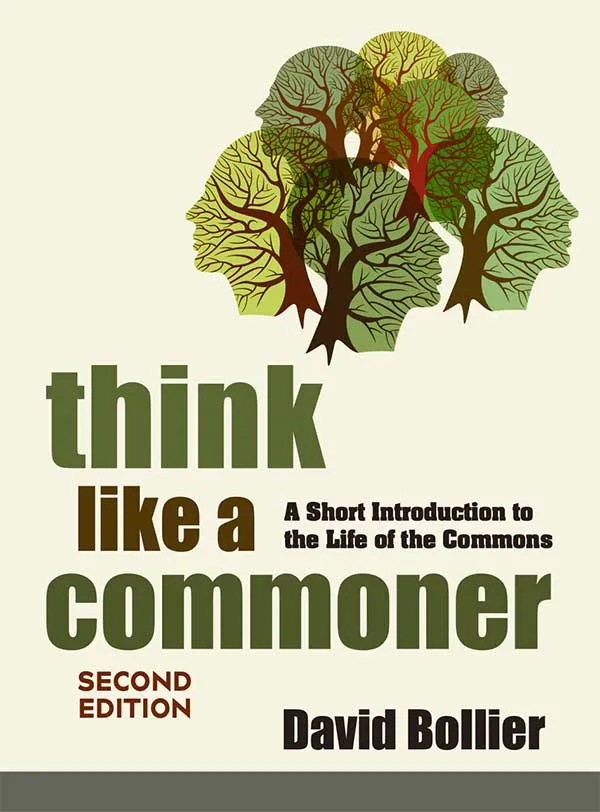
Frame: Think Like a Commoner, David Bollier (2nd ed., 2024).

You

I'm drafting a water-rights agreement between three upstream villages and downstream users in a watershed. Help me see where this falls short of what Ostrom would call a genuine commons.

 think-like-a-commoner
   assess_ostrom_principles("watershed agreement, three upstream villages plus downstream")

Claude

Three structural gaps Ostrom would flag in this draft. (1) Clear boundaries. Your agreement defines water rights but not who's in the commons. Ostrom #1 needs membership boundaries, not just resource boundaries: who counts as an upstream village, who counts as downstream, when does a new household join. (2) Graduated sanctions. You have a single breach clause. Ostrom #5 asks for an escalation ladder so first offenses don't trigger the nuclear option. (3) Nested enterprises. This is a single-tier agreement, but watershed coordination usually needs Ostrom #8's polycentric layering: village-level rules, plus a downstream council, plus a basin-wide forum for disputes neither tier can resolve.

Think Like a Commoner, Ch. 2

Example two, side by side

Reviewing a DAO governance proposal.

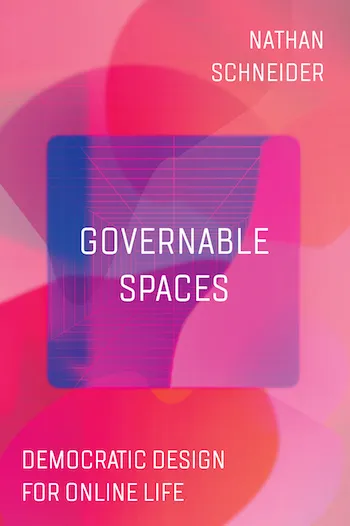
Frame: Governable Spaces, Nathan Schneider (UC Press / Luminos, 2024).

Your proposal

Article 3 — Governance

Token holders vote on proposals via Snapshot.
Quorum: 5% of supply. Threshold: simple majority.

Operational decisions delegated to multi-sig
(3-of-5, founder plus four community members,
elected annually).

Members may exit by redeeming tokens for a
proportional treasury share.

Schneider's rubric

  • Exit. Genuine exit requires alternatives, not just liquidation. Can a faction fork, with data and reputation portable?
  • Voice. Voting is voice only if outcomes are binding and members shape what comes to vote. Who sets the proposal agenda?
  • Ownership stake. Tokens give stake in the treasury, not in the governance layer. Stake in the rules requires structural ownership beyond economic claim.

What the lens reveals

The Snapshot mechanic gives members voice; treasury redemption gives economic exit. Neither gives ownership of the governance layer itself. The multi-sig holds operational authority that voting cannot override and that liquidation cannot reclaim. By Schneider's rubric this is implicit feudalism with cooperative branding: the same single-locus-of-power pattern the book diagnoses across DAOs, only labelled differently.

Countering moves the book names: a recall procedure for multi-sig members between elections (modular politics), forkable governance modules so a dissenting faction can take their stake with them, constitutional limits on what the multi-sig can decide unilaterally (federated subsidiarity).

Governable Spaces, Introduction and Ch. 1

Example three, an annotated edition

Rewriting a first-bug issue template.

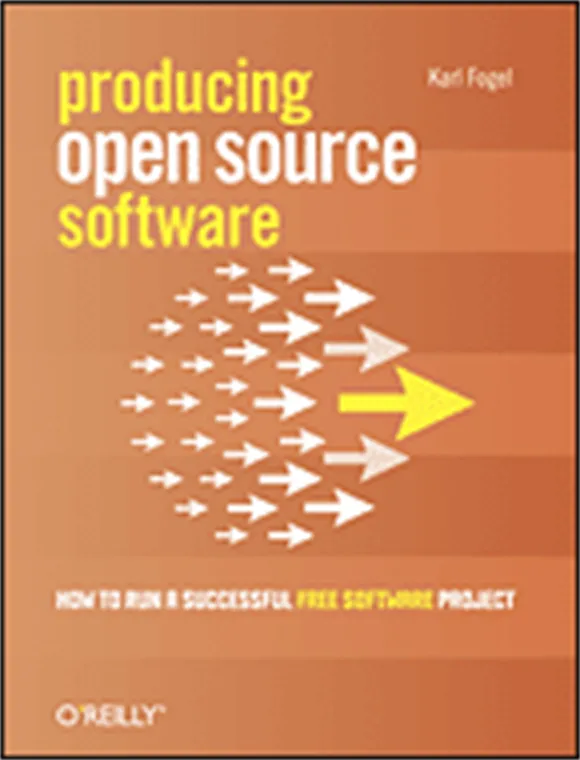
Frame: Producing Open Source Software, Karl Fogel (CC BY-SA 4.0).

Your template, before

## What happened?
[Describe the bug]

## Steps to reproduce
1.
2.
3.

## What did you expect?
...

## What did you see instead?
...

## Environment
- OS:
- Version:
- Browser:

Example four, a conversation

Designing a city's participatory budget platform.

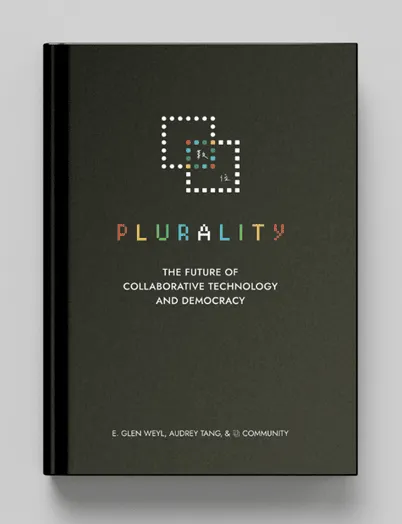
Frame: Plurality, E. Glen Weyl, Audrey Tang and ⿻ Community (2024).

You

I'm helping a city design a participatory budgeting platform for 50,000 residents. One-person-one-vote, project-by-project yes/no. Walk me through what Weyl and Tang would call out as monist or atomist failure points before we ship.

 plurality
   diagnose_monist_atomist("city participatory budgeting, 50K residents, one-person-one-vote, yes/no per project")

Claude

Two structural risks worth designing against before deployment. Monist risk: collapsing the diversity of resident interests into a single optimization target. A simple yes/no on each project pits neighborhoods against each other and lets the most coordinated faction win every vote. Plurality's response is plural voting, Ch. 5-6: quadratic or conviction voting that captures intensity, not just direction, so smaller groups with strong stakes don't get steamrolled by larger indifferent majorities. Atomist risk: treating each resident as a sovereign voter with no group context. A 50K-person platform with no representation of partially-overlapping social affiliations (neighborhoods, ages, language communities) atomises the polity. The ⿻ response is intersectional social identity, Ch. 4-1: let residents declare and combine multiple group memberships, then use those affiliations to surface under-represented coalitions during the deliberation phase, not just in the final tally.

Plurality, Ch. 1-3, Ch. 4-1, Ch. 5-6

Browse the catalog

The catalog

Public MCPs you can install today, private builds available on request, and queued additions in flight.

MCP Democracy tech

Plurality

E. Glen Weyl, Audrey Tang & ⿻ Community, 2024

Glen Weyl, Audrey Tang & ⿻ Community on plural-voting, augmented deliberation, and digital democracy — Taiwan-tested civic-tech, made queryable from any AI agent.

View / install →
MCP Democracy tech

Governable Spaces

Nathan Schneider, 2024

Schneider's framing of democratic design for online life — 13 tools for diagnosing implicit feudalism, finding precedent democratic-medium cases, and surfacing governance forms (sortition, federated subsidiarity, plural voting).

View / install →
MCP Commons

Think Like a Commoner

David Bollier, 2024

Bollier's commons framing — turned into 12 tools for naming enclosures, finding precedent commons, walking Ostrom's 8 design principles, and reframing market-mind problems.

View / install →
SKILL Open source

Producing Open Source Software

Karl Fogel, 2023

Karl Fogel's canonical guide to running open-source projects — turned into a Claude Code skill (claude-audit-oss) that audits OSS repos against Fogel's chapters.

View / install →
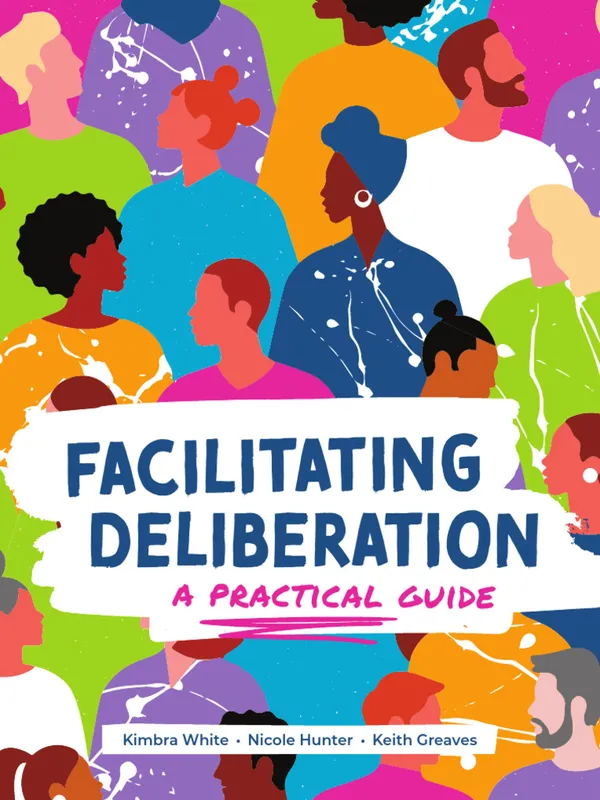
MCP Facilitation Private

Facilitating Deliberation

Kimbra White, Nicole Hunter, and Keith Greaves, 2023

MosaicLab's facilitator's reference — 12 tools for designing and running deliberative democracy processes, from macro/micro design templates through readiness assessments to in-room activity selection.

Request access →

Commission

Have a book or methodology of your own?

If you're an author, publisher, consultant, or methodology owner with content you want made callable for AI agents, get in touch. We work with public-license and copyrighted source material both.

Get in touch