Beautiful Solutions
Why this book
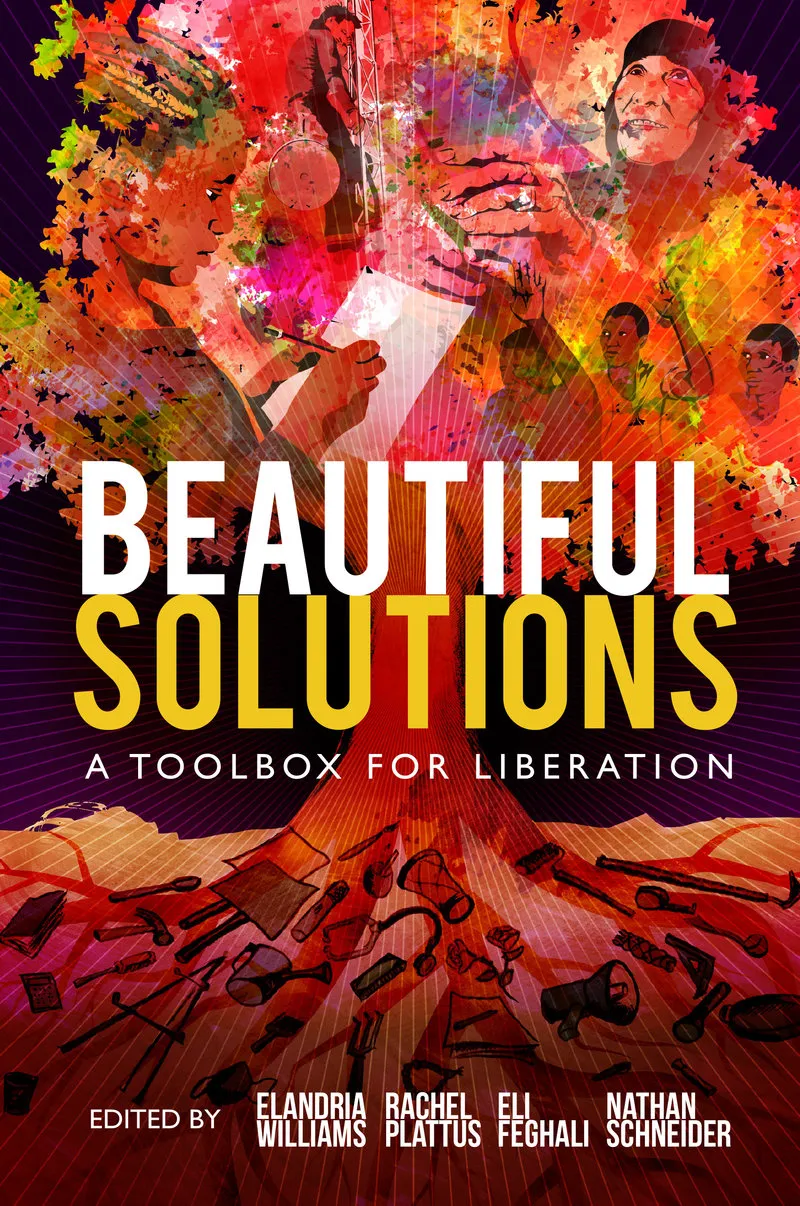
Beautiful Solutions gathers work from more than seventy contributors into a toolbox for people building more just and livable economies. Its examples range from food sovereignty and debt abolition to folk schools and energy democracy, with stories spanning Argentina to Zimbabwe. The book was created through a partnership of Beautiful Trouble, New Economy Coalition, People’s Hub, and Highlander Center.
The online toolbox is organized as a connected set of values, principles, questions, solutions, and stories. That structure matters. It lets a practitioner approach a live challenge from several directions without flattening one community’s experience into a recipe for another.
What we built
beautiful-solutions-mcp exposes the English online toolbox through eight deterministic tools:
- Find and inspect.
search_toolbox,list_entries, andget_entrylocate material and return its summary, authors, references, reviewed method card, and canonical source link. - Follow the source.
get_related_entriestraverses relationships supplied by the toolbox rather than inventing new connections. - Work across possibilities.
map_challenge,compare_entries, andbuild_discussion_guideassemble exploration leads and discussion prompts without ranking entries or claiming that a model will transfer to a new place. - Check provenance.
get_source_inforeports the inventory, source snapshot, adaptation notes, and reuse conditions.
Tool responses require no LLM, database, or live source at runtime. Every result includes attribution and the CC BY-NC-SA 4.0 license envelope.
What’s in the catalog
The MCP contains 85 English toolbox entries:
- 8 values
- 10 principles
- 8 questions
- 27 solutions
- 32 stories
Each entry retains its source-authored summary and relationships, author and reference metadata where supplied, and a link to the complete entry on Beautiful Trouble. Manually reviewed method cards add source-grounded purposes, mechanisms, actors, conditions, constraints, tensions, observable signals, and transfer questions where the source supports them. Complete source write-ups and images are not bundled.
What you can ask
- “Map community ownership of housing and land across the toolbox’s questions, values, principles, solutions, and stories.”
- “What does the toolbox connect to Community Land Trusts, and where should I read further?”
- “Compare participatory budgeting and community land trusts without declaring a winner. What local information would still be needed?”
- “Build a discussion for a neighborhood housing coalition using Community Land Trusts and Limited-Equity Housing Cooperatives.”
- “Explore community-controlled renewable energy. Show why each result matched and keep the results framed as possibilities, not recommendations.”
License
Beautiful Trouble states that the written online toolbox is licensed under CC BY-NC-SA 4.0. The adapted dataset and source-grounded output templates use the same license: attribution and ShareAlike are required, and commercial use requires separate permission. The software code is MIT licensed.
This is an independent adaptation, not an endorsement by Beautiful Trouble, the editors, or contributors. It is an aid for finding and discussing the source work, not a substitute for the book or complete online toolbox.
Related
- Think Like a Commoner names commons, enclosures, and commoning practices in David Bollier’s framing.
- Governable Spaces examines democratic design for online communities through Nathan Schneider’s work.
- Plurality offers another lens on collaborative institutions and democratic technology.
MCP server
beautiful-solutions-mcp
Claude Desktop
Open Customize → Connectors, select Add custom connector, and enter this server URL:
https://beautiful-solutions-mcp-production.up.railway.app/mcpName it beautiful-solutions, finish connecting it, then enable it from + → Connectors in a conversation.
Claude Code
Run from your terminal:
claude mcp add --scope user --transport http beautiful-solutions https://beautiful-solutions-mcp-production.up.railway.app/mcpRestart your Claude Code session. claude mcp list should show the server connected.
- Source on GitHub →
https://beautiful-solutions-mcp-production.up.railway.app/mcp